Solutions · PCB Manufacturing

Bare PCB fabrication to global spec.

Rigid FR-4, high-Tg, halogen-free, aluminum MCPCB, rigid-flex, polyimide, HDI, and high-frequency substrates. 1–24 layers standard, up to 40 on request. Blind and buried vias, via-in-pad (POFV), controlled impedance ±10%. UL listed, ISO 9001:2015 certified, IPC-6012 Class 2 and Class 3 capable.
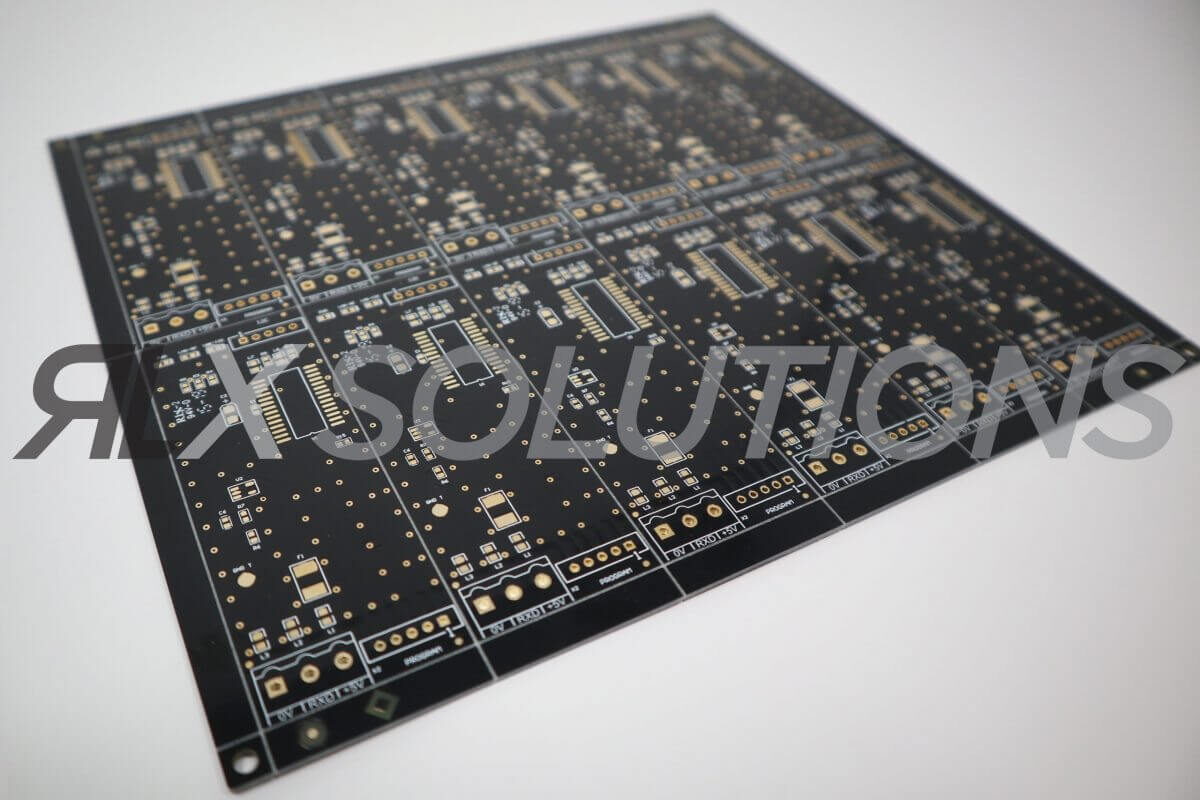
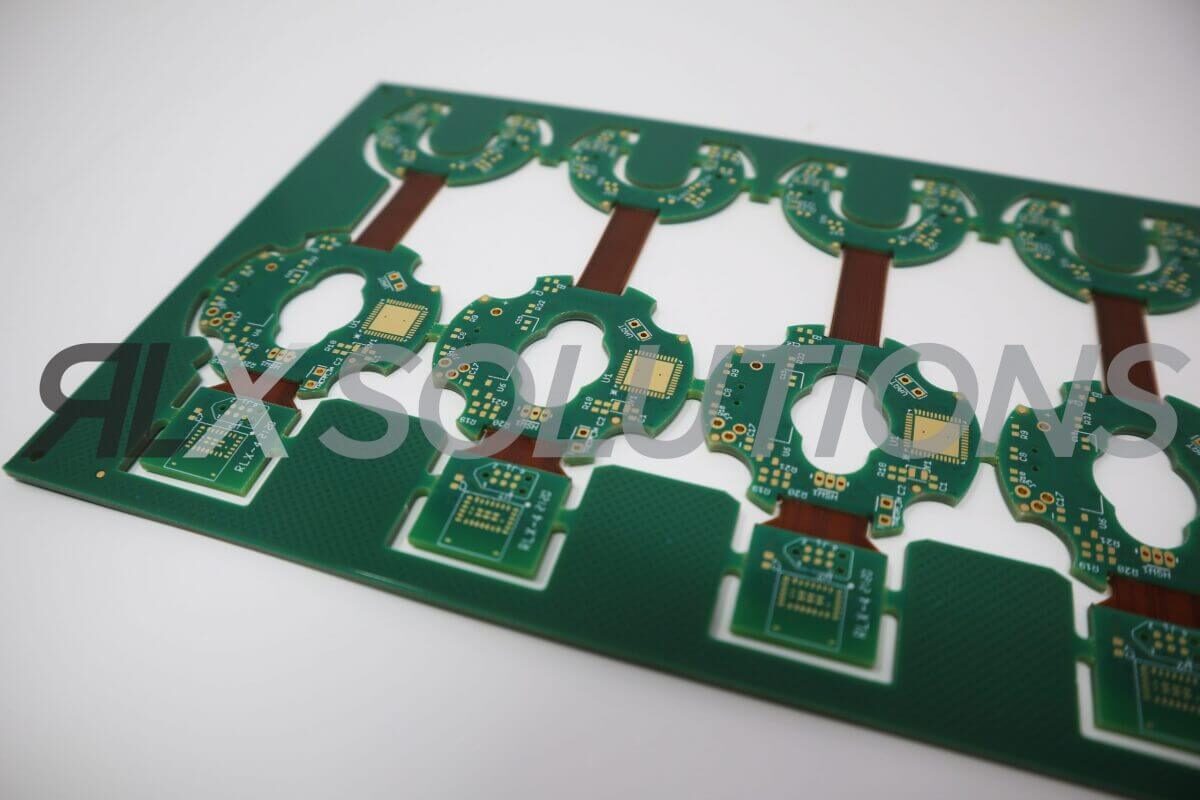
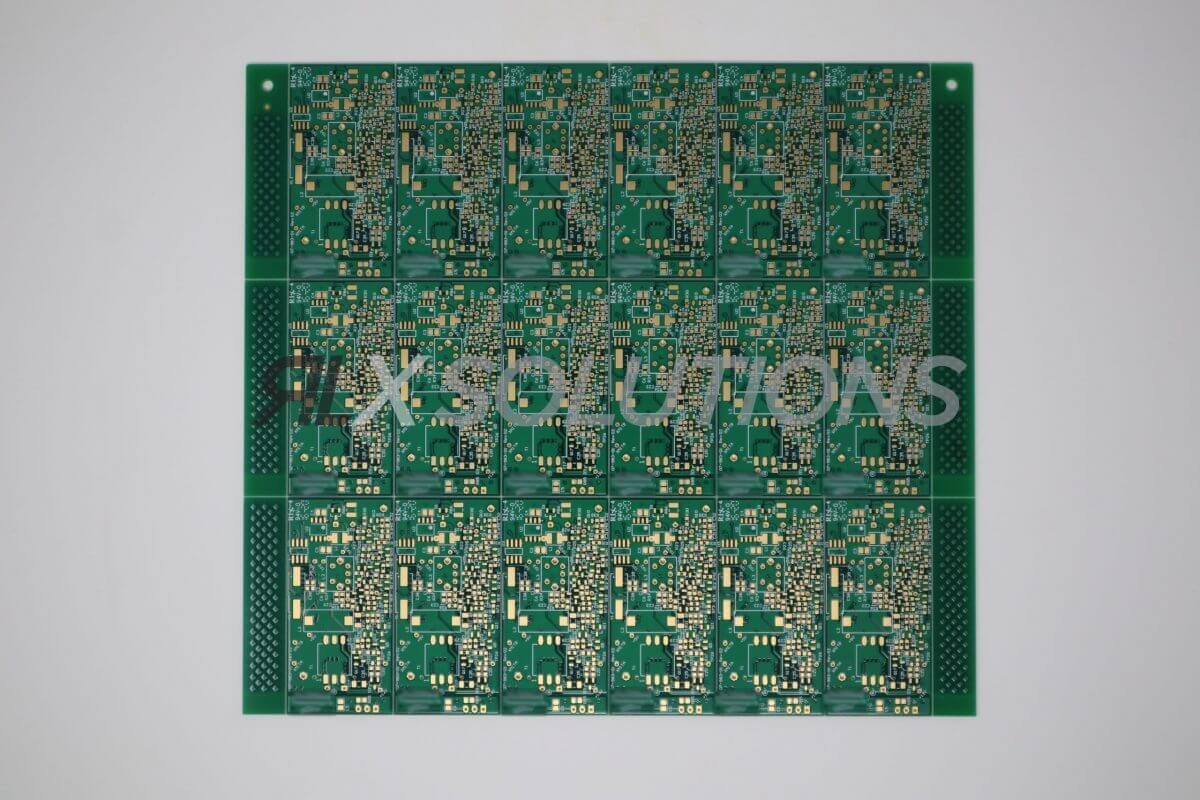
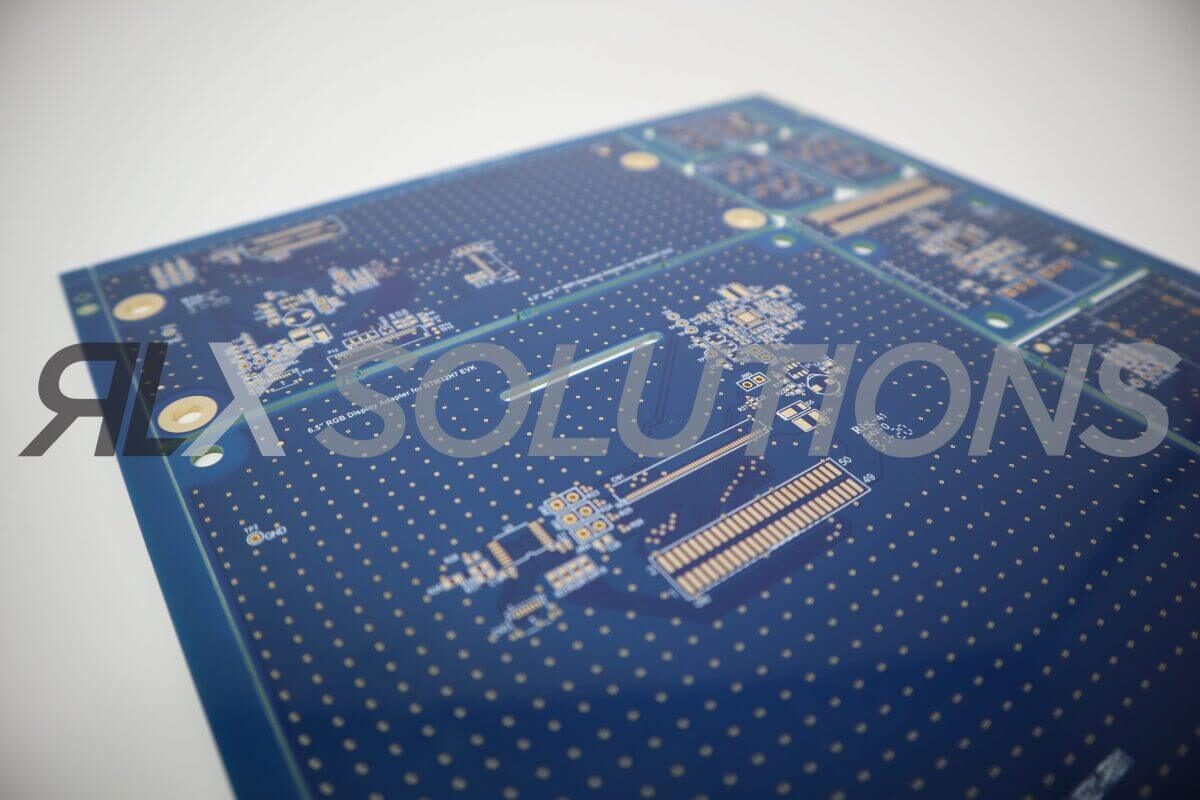
PCB manufacturing is the fabrication of the bare printed circuit board before any parts are placed. RLX Solutions manufactures rigid, multilayer, flex, rigid-flex, and metal-core boards in Canada for engineers and procurement teams who need verified specifications, traceable quality, and a quote within 24 hours.

01 — Overview

What we fabricate.

We build the substrate, stackup, and process to the needs of your application. FR-4 standard and high-Tg for general-purpose builds. Aluminum MCPCB and copper-core for thermal-critical LED and power designs. Polyimide flex and FR-4/flex hybrid rigid-flex for compact and dynamic-bending applications. Rogers and PTFE for RF and high-frequency. HDI with stacked and staggered microvias for high-density designs.

Every PCB gets engineer-reviewed DFM before fabrication starts — no separate charge, no offshore handoff delay. Impedance-controlled stackups are verified by TDR on coupon with the test report shipped alongside the order. Class 3 builds follow the tighter annular-ring, copper-to-edge, and cross-section requirements — visible in the first-article documentation.

For the complete spec envelope (trace/space by layer count, minimum drills, surface finishes, via types, impedance ranges, and quality standards), see the Capability Reference on the home page.

02 — Volume

Prototype through sustained production.

Same quality system from the first five PCBs through the fifty thousandth. No setup re-do between tiers.

TIER / 01

Prototype

5-PCB minimum · 5-day standard, 3-day expedite

First-article builds with full DFM review. Quote response inside 24 hours. Ideal for design verification, debug, and pre-production validation.

TIER / 02

Pilot

25–500 PCBs · 2–3 week typical

Pre-production runs where DFM is locked and early-market delivery matters. First-article approval before the production lot.

TIER / 03

Production

500–50,000+ PCBs · 3–6 week typical

Sustained production volume with scheduled delivery, AQL sampling, and full lot traceability per ISO 9001:2015 audit trail.

TIER / 04

High-Rel & Class 3

IPC-6012 Class 3 build

Tighter annular rings, plating specs, and cross-section sampling for medical, aerospace, and life-safety programs that require Class 3 workmanship.

03 — Files accepted

Submit for review.

Gerbers preferred for manufacturing. If you're earlier in the design cycle, send your native PCB design file and we'll extract what we need. Every submission receives engineering DFM review before quotation.

Manufacturing
Gerber RS-274XODB++IPC-2581NC drill
Design
Altium (.PcbDoc)EagleKiCadOrCADDipTrace
Documentation
Stackup PDFImpedance targetAssembly drawingFab notes
For PCBA
BOM (.xlsx / .csv)Pick-and-place / centroidAssembly drawing
04 — Capability reference

What we can actually build.

The standard envelope of every service we offer, organized the way an engineer evaluates a manufacturer: PCB parameters, drilling, traces, via types, surface finishes, impedance, special processes, and test. Specs are our routine production envelope. Anything beyond — 28-layer stackups, sub-2 mil traces, copper in >6 oz, controlled impedance tighter than ±5% — is available on request. Ask.

// HOW TO USE THIS REFERENCE

Pick the process you need from the tabs. Check your design against the specs. If your file passes, it's a routine build. If it doesn't, tell us what's off — 90% of edge cases are builds we quote without issue.

// LEGEND Routineeveryday production · no engineering review needed Advancedengineered build · DFM review confirms feasibility On requestboundary capability · scoped per project
01.01

PCB parameters

FR-4, high-Tg, halogen-free substrates
Layer countRoutine
1 to 24 layers standardup to 40 on request
Board sizeRoutine
6 × 6 mm minimum · 500 × 600 mm maximum single-piece
Board thicknessRoutine
0.4 mm – 3.2 mm ±10% tolerance
Dimensional toleranceRoutine
±0.1 mm standard · ±0.05 mm precision
Base materialRoutine
FR-4 Tg 135°CFR-4 High-Tg 150 / 170 / 180°CHalogen-freeCEM-1 / CEM-3
Laminate manufacturersRoutine
Kingboard (KB-6160 / 6165F / 6167F)Nanya (NP-155F / 175F / NPG-170)IsolaShengyi (S1000-2 / S1141 / S1170G)ITEQ (IT-180A / IT-158)Ventec (VT-47 / VT-481)Panasonic (MEGTRON)
High-frequency laminatesAdvanced
Rogers RO4003C / RO4350BRogers RO3003 / RO3010Taconic TLY / RF-35Arlon 25N / 55NTPTFE / TeflonPolyimide
CTI ratingAdvanced
CTI 175 V / 250 V / 600 V available for high-voltage designs
01.02

Copper weight

Outer layersRoutine
0.5 oz / 1 oz / 2 oz / 3 oz standardup to 6 oz heavy copper on request
Inner layersRoutine
0.5 oz / 1 oz / 2 oz
Heavy copperOn request
4–6 oz outer, up to 3 oz inner for power conversion & high current
01.03

Drilling

Mechanical + laser
Min mechanical drillRoutine
0.15 mm (6 mil) plated through-hole
Min laser drill (microvia)Advanced
0.10 mm (4 mil) · stacked & staggered configurations
Max drillRoutine
6.5 mm mechanical
Hole toleranceRoutine
±0.08 mm plated (PTH) · ±0.05 mm non-plated (NPTH)
Min annular ringRoutine
0.075 mm (3 mil) inner · 0.1 mm (4 mil) outer
Max aspect ratioRoutine
10:1 standard · 12:1 on request
Slot holesRoutine
Plated from 0.65 mm · non-plated from 1.0 mm
01.04

Traces & spacing

Minimum by layer count
2-layer, 1 ozRoutine
3 mil / 3 mil trace width / spacing
2-layer, 2 ozRoutine
6 mil / 6 mil trace / spacing
4-layer, 1 oz outerRoutine
3 mil / 3 mil trace / spacing
6+ layerAdvanced
3 mil / 3 mil standard
HDI fine-lineOn request
2 mil / 2 mil on request selected sections, engineered stackup
Edge clearanceRoutine
0.3 mm copper-to-edge minimum
01.05

Via types

Through-hole (PTH)Routine
All layer counts, standard plating
Via-in-pad (POFV)Advanced
Resin fill + copper cap, planarized standard process for 4+ layers
Blind viasAdvanced
Sequential lamination · 4+ layer stackups
Buried viasAdvanced
Between any inner layer pair · 4+ layer stackups
Stacked & staggered microviasOn request
HDI builds · laser drilled, plated, filled, and capped
Button platingAdvanced
For BGA fanout and density optimization
01.06

Surface finish

RoHS and leaded options
HASL (tin-lead)Routine
Standard · most cost-effective · robust solderability
HASL lead-freeRoutine
RoHS compliant · SnCuNi alloy
ENIGRoutine
Ni 3–6 μm + Au 0.05–0.1 μm fine-pitch, BGA, long shelf
ENEPIGAdvanced
For wire bonding and extended shelf life
Immersion silverAdvanced
Flat surface · RoHS compliant
Immersion tinAdvanced
Press-fit and fine-pitch applications
OSPRoutine
Organic coating · cost-effective, single-reflow builds
Hard gold (gold fingers)Advanced
30 μ″ / 50 μ″ Au with bevel card-edge connectors
01.07

Solder mask

Colors
Green (fastest)BlueRedBlackWhiteYellowPurpleMatte GreenMatte Black
Type
LPI (Liquid Photo-Imageable) · thermal-cured
Thickness
10–25 μm
Min mask dam
0.08 mm (3 mil) between pads
Expansion
0.05 mm per side (default)
Peelable mask
Available for selective plating / rework protection
01.08

Silkscreen (legend)

Colors
White (standard) · Black (on white mask) · Yellow
Min line width
0.1 mm (4 mil)
Min character height
0.8 mm (32 mil)
Ink
Thermal-cured epoxy · UV-cured available
01.09

Impedance control

Single-endedAdvanced
25–120 Ω · microstrip, stripline, coplanar
DifferentialAdvanced
50–150 Ω · edge-coupled, dual coplanar
ToleranceAdvanced
±10% standard · ±5% on request
VerificationAdvanced
TDR test on coupon · full report with shipment
01.10

Outline & special processes

Outline tolerance
±0.1 mm standard · ±0.05 mm precision
V-cut
20° / 30° angle · panelization for SMT assembly
Tab route
With mouse-bite perforation · customer-specified tab positions
Castellated holes
Half-hole edge plating for module / daughtercard designs
Edge plating
Continuous copper on PCB edges for EMI / ground contact
Press-fit plating
Tight hole tolerance for connector insertion
Countersink / counterbore
Mechanical · custom angle and depth
Carbon paste / ink
Keypad contacts, jumpers, low-cost conductors
01.11

Testing & inspection

100% tested before ship
Electrical testRoutine
Flying probe (prototype) or bed-of-nails (production) · 100% tested
AOIRoutine
Post-etch inner layers · post-solder mask outer layers
X-ray (AXI)Advanced
For internal features and hidden layers on HDI builds
Cross-sectionOn request
Microsection on request · IPC-TM-650 methods
SolderabilityOn request
Per J-STD-003 on request
First article inspectionRoutine
AS9102 format available
01.12

Quality standards

Workmanship
IPC-A-600 acceptability · IPC-6012 Class 2 and Class 3
Design verification
IPC-2221 / IPC-2222 generic and sectional standards
Quality system
ISO 9001:2015 certified by DNV · Cert #C712619
UL listing
File #E466570 since 2013
Compliance
RoHS · REACH · CE · CSA alignment
02.01

Flex PCB parameters

Polyimide base
Layer count
1 to 8 layers flex
Base material
Polyimide (PI) · adhesive and adhesive-less laminate PET for cost-sensitive low-temp builds
Laminate manufacturersRoutine
DuPont Pyralux (AP / LF)Panasonic FELIOSShengyi SF305 / SF202ThinflexNikkan Nikaflex
PI thicknessRoutine
12.5 μm / 25 μm / 50 μm
Copper
Rolled-annealed (RA) · electrodeposited (ED) · 0.5 / 1 / 2 oz
CoverlayRoutine
PI + acrylic adhesive (25 μm + 25 μm typical) · LPI flexible solder mask option
StiffenersAdvanced
FR-4 · polyimide · stainless steel · aluminum
Min bend radiusAdvanced
6× substrate thickness (static) · 12× (dynamic flex)
Min trace / space
3 mil / 3 mil
02.02

Rigid-flex

FR-4 + polyimide hybrid
Total layer countAdvanced
Up to 12 layers (rigid + flex sections combined)
ConstructionAdvanced
Rigid FR-4 sections bonded to polyimide flex ribbon · single, asymmetric, or booked stackups
Flex-to-rigid transitionAdvanced
Controlled impedance options available · bookbinder construction for dynamic applications
Typical applications
Wearables · medical instruments · aerospace · folded compact packaging · camera modules
02.03

Surface finish & special

Finishes
ENIG (standard) · immersion tin · OSP · immersion silver · hard gold for fingers
EMI shieldingAdvanced
Silver paste screen print · copper foil shielding film · plated shielding
Transparent flexOn request
Clear PI substrate with printed conductive traces on request
Impedance
Controlled impedance in flex: available on request wider tolerance than rigid
03.01

Metal core parameters

Aluminum & copper core
Base metalRoutine
Aluminum 1100300350526061Copper C1100
Construction
Single-sided · double-sided · multi-layer MCPCB
Thermal conductivityRoutine
1.0 – 9.0 W/m·K dielectric (spec to application)
Dielectric thicknessRoutine
75 μm – 150 μm
Copper weight
1 oz – 10 oz
Board thickness
0.8 mm – 3.2 mm
Min hole size
0.5 mm mechanical drill
Min trace / space
6 mil / 6 mil
03.02

Finish & processes

Surface finish
HASL lead-free · ENIG · OSP · immersion silver
V-cut & routingRoutine
Standard · panelization for SMT assembly
Typical applications
LED lighting · power conversion · automotive electronics · motor drives · thermal-critical circuits
04.01

Component envelope

Packages we routinely place
SMT passivesRoutine
0100502010402060308051206121020102512
BGAAdvanced
Down to 0.3 mm pitch · up to 60 × 60 mm package
QFN / DFNRoutine
Standard and fine-pitch (0.4 mm) · thermal pad reflow with void control
QFP / TQFP / LQFPRoutine
All standard pitches · fine-pitch 0.4 mm
Leaded packagesRoutine
SOT · SOIC · SOP · SSOP · TSOP · LGA · CSP · PoP
Through-holeRoutine
Connectors · switches · power components · electromechanical parts · press-fit
04.02

PCB envelope

Min board sizeRoutine
10 × 10 mm
Max board sizeRoutine
500 × 500 mm
Board thickness
0.6 mm – 3.2 mm
PanelizationRoutine
V-cut · tab route with mouse-bites · scored break-away
04.03

Assembly processes

Surface mount (SMT)Routine
Single- and double-sided · stencil print, pick-and-place, reflow
Through-hole
Wave solder · selective solder · hand solder for low-volume / complex
Mixed technologyRoutine
SMT + through-hole on same assembly
Solder alloysRoutine
SAC305 lead-free (standard) · Sn63Pb37 tin-lead (on request) · low-temp alloys available
Reflow profilingRoutine
10-zone convection · thermocouple profile verification · nitrogen reflow available
Press-fit insertionAdvanced
Tool-assisted · DIN connector standards
04.04

Inspection

SPI + AOI + X-ray + manual
SPIRoutine
Solder Paste Inspection · 100% pre-reflow coverage
AOI
Post-reflow, both sides · placement, orientation, solder joint verification
AXI (X-ray)
BGA, LGA, QFN thermal pads · void inspection · hidden joint verification
Manual visualRoutine
Per IPC-A-610 Class 2 or Class 3 criteria
First article (FAI)Routine
On every new build · customer-signed approval before production lot
04.05

Test

Flying probe (ICT)Routine
Prototype and low-volume · no fixture required
Bed-of-nails ICTAdvanced
Production volume · customer-supplied or RLX-developed fixture
Functional test (FCT)Advanced
To customer specification · pass / fail logging with traceability
Boundary scan (JTAG)Advanced
For BGA / QFN coverage where ICT can't reach
Burn-inOn request
Environmental stress screening on request
04.06

Programming & marking

In-system programmingAdvanced
ISP / ICSP through customer programming header
JTAG / SWDAdvanced
Boundary-scan programming and verification
Bootloader / firmwareAdvanced
Customer firmware flashed and verified per build
SerializationAdvanced
Serial number marking · MAC address programming · customer-defined schema
Label & mark
Laser mark · inkjet · label print · barcode / QR code
04.07

Special processes

Conformal coatingAdvanced
Acrylic · silicone · polyurethane · parylene selective or full-PCB
UnderfillAdvanced
Capillary flow and no-flow · BGA and CSP reinforcement
Potting / encapsulationAdvanced
Custom-mold potting · environmental protection
BGA reworkAdvanced
Removal, reballing, replacement · X-ray verified
Solder dippingOn request
Tin whisker mitigation · lead-tin conversion
Cable & harness integrationAdvanced
On-assembly wire harness termination · connectorization
04.08

Process controls

ESDRoutine
ANSI/ESD S20.20 aligned · EPA work zones · wrist-strap / footwear / floor monitoring
MSD handlingRoutine
Per IPC/JEDEC J-STD-033 · dry-cabinet storage · bake-out before reflow
SolderingRoutine
J-STD-001 Class 2 and Class 3 trained operators
Stencil managementRoutine
Laser-cut stencils · 0.08 mm – 0.15 mm standard · step-stencils on request
TraceabilityRoutine
Full component lot / date code capture to serial number · retained per ISO 9001 schedule
04.09

Quality standards

Workmanship
IPC-A-610 Class 2 and Class 3
Soldering
J-STD-001 Class 2 and Class 3
Quality system
ISO 9001:2015 · DNV Cert #C712619
UL
File #E466570
05 — Applications

PCB technologies, matched to end markets.

MEDICAL
Class 3 + Traceability
Diagnostic, monitoring, therapeutic · full FAI and cross-section
TELECOM
HDI + Impedance Control
Multi-layer, high-speed, Rogers for RF front-end
LIFE-SAFETY
UL + Class 3
Fire, gas, security, alarm · UL-aligned workmanship
INDUSTRIAL
High-Tg + Heavy Copper
Power conversion, motor drives, harsh environments
LED / LIGHTING
Aluminum MCPCB
Thermal-critical builds, 1.0–9.0 W/m·K dielectric
STARTUPS
Rapid Proto + Pilot
Engineer DFM support · no minimum commitment
06 — Recent builds

A look at what's coming off the line.

Recent production work — customer-specific details anonymized. Each of these passed full electrical test, AOI, and cross-section verification before shipment.

07 — Get started

Send files. Quote in 24 hours.

Gerbers, stackup notes, impedance targets, and any fab callouts. An engineer reads every inquiry and replies with pricing, lead time, and DFM feedback.

Frequently asked questions

What layer counts can RLX manufacture?
One to 24 layers in standard production, and up to 40 layers on request with an engineered stackup.
Do you build prototypes and production volumes?
Yes. Prototypes and production run on the same processes and equipment, so the move from prototype to volume does not require requalifying the board.
What files do you need to start a PCB manufacturing quote?
Gerber RS-274X, ODB++, or IPC-2581 data, an NC drill file, and a stackup or impedance target for controlled-impedance boards. Native files from Altium, Eagle, KiCad, OrCAD, and DipTrace are also accepted.
Which surface finishes are available?
HASL, lead-free HASL, ENIG, ENEPIG, immersion silver, immersion tin, OSP, and hard gold for card-edge fingers. The right finish depends on your assembly process, pitch, and shelf life.
What IPC class do you fabricate to?
IPC-A-600 acceptability and IPC-6012 Class 2 and Class 3. Class 3 is used for life-safety and medical boards.
Do you manufacture flex and rigid-flex boards?
Yes. Polyimide flex from one to eight layers, and rigid-flex up to twelve layers combining FR-4 sections with a flex ribbon.